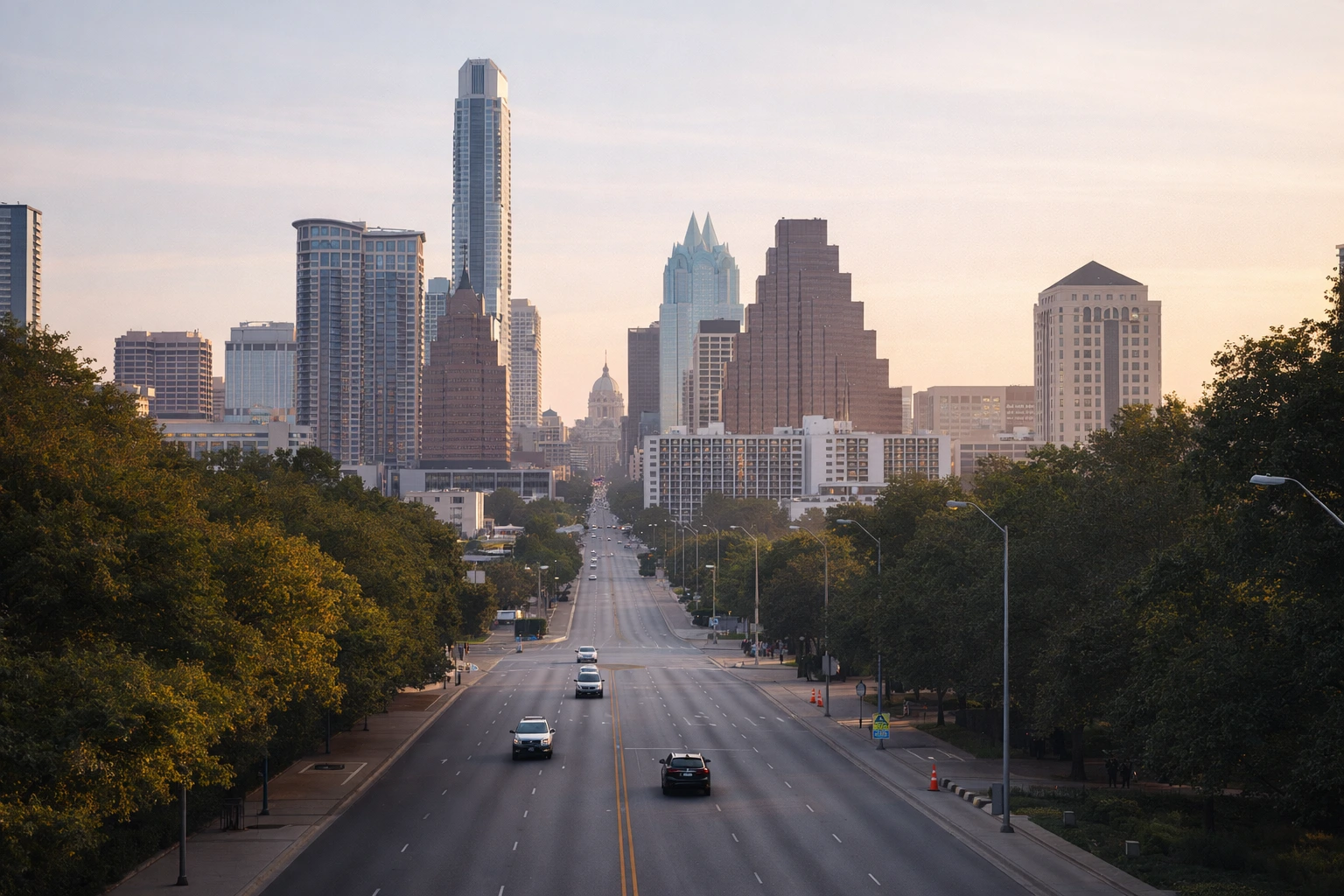
There is a subtle shift in Austin between the start of the week and the weekend that most people feel but rarely articulate. Streets move more gently. Coffee shops feel less compressed. Parks seem to exhale. The city itself hasn’t changed — only its rhythm has.
Earlier in the week, Austin feels calmer not because there is less life, but because there is more space between moments. Fewer overlapping plans. Less performative energy. More room for everyday life to unfold without friction.
The City Before the Crowds Stack Up
By Thursday afternoon, Austin begins to brace for momentum. Plans accumulate. Events overlap. Popular places anticipate volume. The city starts layering intention onto every shared space.
But Mondays and Tuesdays arrive without expectation. Schedules are lighter. Social calendars haven’t filled in yet. The city moves forward, not outward — progressing through the week without expanding into excess.
This is when quiet spots in Austin feel most accessible. Not because they are hidden, but because fewer people are asking something of them at the same time.
Parks that feel busy on weekends feel breathable again. Walks feel uninterrupted. Even routine errands carry less friction, simply because fewer decisions are stacked on top of one another.
Why Timing Changes the Feel of Austin
Austin rewards timing more than urgency. Earlier in the week, schedules are looser, expectations are lower, and the city has not yet assigned meaning to every space.
This is why places featured in hidden parks in Austin often feel more restorative on weekdays. The calm is not manufactured — it is uncovered. These spaces function the same way every day, but demand determines how they feel.
Calm doesn’t disappear in Austin. It compresses. Weekdays stretch it back out.
Slower Days Invite Different Awareness
Earlier in the week, people move with less performative energy. Conversations linger without urgency. Choices feel less reactive. The city feels less like a series of decisions and more like a place you’re allowed to occupy.
This shift is closely connected to slowing down in Austin — not as a lifestyle overhaul, but as a recalibration of attention.
When expectations drop, awareness rises. And Austin responds quietly to that exchange.
Why This Calm Is Easy to Miss
Many people only experience Austin during its busiest windows. Weekends. Events. Peak hours. These moments are louder, faster, and more visible — but they are not the whole city.
Earlier in the week, Austin isn’t asking you to consume it. It’s offering space to inhabit it. Without the pressure to optimize time or chase plans, the city feels more human.
This rhythm pairs naturally with quiet living in Austin, where balance comes not from avoidance, but from choosing when to engage and when to step back.
What Early-Week Calm Makes Possible
When Austin feels calmer earlier in the week, it quietly changes what feels possible. Tasks feel lighter. Decisions take less effort. Familiar routines regain texture because attention isn’t being pulled in every direction at once.
This doesn’t mean life becomes slower overall. It means clarity arrives sooner. Space appears between thoughts. The city stops competing for your awareness and starts supporting it.
Many people who notice this shift don’t try to recreate it on weekends. Instead, they learn to protect it when it appears — using the early part of the week to reset before momentum returns.
Nothing about Austin becomes calmer earlier in the week. You simply meet the city before it fills up.
This reflection is inspired by lived experience and observation. It is written as narrative exploration, not instruction or recommendation.
