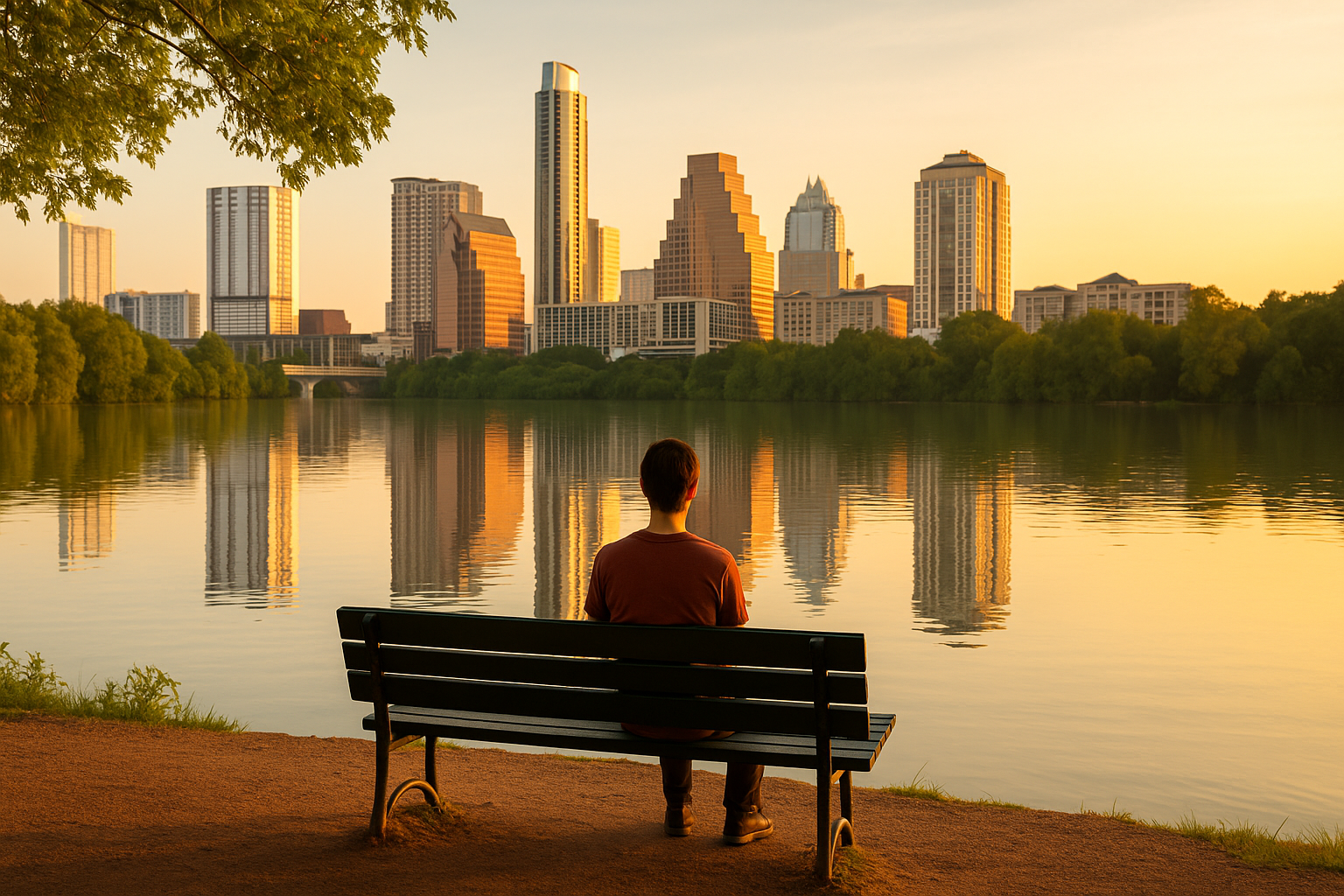
I didn’t realize how fast I was moving until everything around me started to blur. Days in Austin had become stacked with notifications, traffic, and plans that never seemed to end. Even the good moments felt rushed. One morning, almost without intention, I stopped — not permanently, not dramatically — just long enough to see what would happen if I let the city set the pace instead of fighting it.
That pause didn’t change Austin. It changed how I moved through it.
Letting the Day Begin Without Urgency
The morning unfolded quietly. No alarms. No scrolling. Just a walk through my neighborhood as light filtered through the trees. I noticed things I’d been passing for years — the smell of wet pavement after rain, the way birds traded signals back and forth, how the city’s usual hum softened before fully waking up.
These early moments felt different not because they were special, but because nothing was asking for my attention yet. Austin wasn’t quiet — it was unclaimed.
I sat outside one of those hidden Austin cafes I’d always meant to try and ordered a drink without checking the time. Nothing remarkable happened. And that was the point. Slowing down didn’t add something new — it removed the pressure to extract value from every minute.
When Austin Feels Different at a Slower Pace
As the day moved on, the city felt subtly altered. Conversations lingered. Smiles came easier. Even traffic felt less chaotic when I wasn’t racing it. Austin didn’t suddenly become calm — it became readable.
The patterns were always there. I’d just been moving too fast to notice them.
This is why, when Austin feels busy, the answer often isn’t escape. It’s recalibration. The city rewards patience more than precision. It asks you to listen rather than optimize.
Later that afternoon, I walked along the lake. Runners passed. Families gathered. Couples sat quietly beside the water. No one seemed to be chasing anything. Time didn’t disappear — it loosened. Slowing down returned something I hadn’t realized I’d misplaced: presence.
What Slowing Down Actually Gives Back
Slowing down isn’t about doing less. It’s about creating space between moments. In that space, clarity shows up without effort. Decisions feel lighter. Attention stretches wider.
The city stops feeling like a series of obstacles and starts feeling like a place again.
When pace eases, connection follows. Conversations deepen. Ordinary surroundings regain texture. Gratitude appears not because life improved, but because awareness returned.
Why Slowing Down Works Especially Well in Austin
Austin is uniquely suited to slower living — not because it’s quiet, but because calm still exists between its louder moments. Early mornings, shaded spaces, post-rain afternoons, and off-peak hours create natural openings.
The city hasn’t lost its stillness; it’s been compressed into windows that reward timing.
This is why slowing down here feels less like resistance and more like alignment. You’re not fighting the city. You’re moving with its quieter undercurrents.
Many people notice this most clearly earlier in the week, when expectations haven’t stacked yet. Pages like why Austin feels calmer earlier in the week explore how timing alone can soften the city.
Building Slower Moments Into Everyday Life
Slowing down doesn’t require retreats or major lifestyle shifts. It happens in small choices — starting the day earlier, taking the long way home, leaving space between plans, choosing experiences that don’t demand performance.
These choices add up. Sunrise walks, unstructured afternoons, and unplanned pauses become anchors. They don’t remove responsibility — they soften how responsibility feels.
Pages like Austin sunrise mind reset explore how even subtle changes in timing can reshape how the city feels without changing where you are.
Slowing Down Without Missing Out
One of the quiet fears around slowing down is the idea of missing something. But in Austin, the opposite is often true. When pace eases, more becomes visible. Free, everyday experiences regain their weight.
Presence replaces pressure. Enjoyment returns without needing justification.
This is why free things to do in Austin pair naturally with a slower rhythm — not as entertainment, but as permission to enjoy the city without constant consumption.
Learning How to Stay
Slowing down isn’t a single decision. It’s a practice. Some days you forget. Some days the city pulls you back into its current. But each pause makes the next one easier.
This way of living connects closely with quiet living in Austin, where balance comes not from withdrawal, but from awareness and restraint.
When you slow down, Austin doesn’t fade. It comes into focus. The city hasn’t stopped offering space — it’s simply waiting for you to notice it.
This reflection is inspired by lived experience and observation. It’s written as narrative exploration, not instruction.
