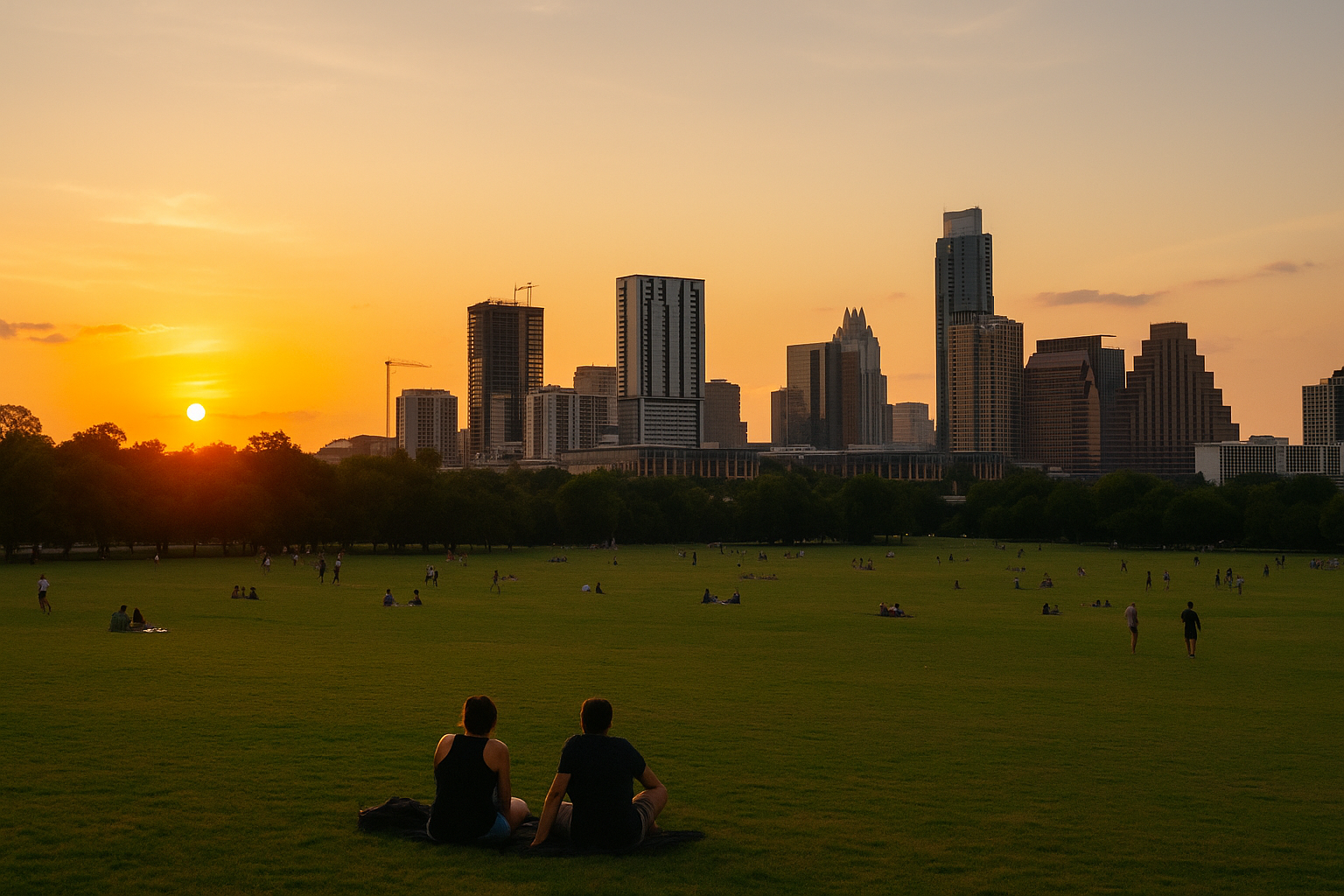
There are Austin days that begin without a plan — days that don’t demand productivity, intention, or explanation. Maybe it’s a soft spring morning when the windows stay open a little longer, or a late October day when the air smells faintly of coffee and cedar. You hear music somewhere in the distance, feel the city stretching awake, and remember why you stayed.
Life in Austin isn’t defined by major events or headlines. It lives in smaller moments — a familiar guitar rhythm drifting down the street, bikes gliding past on the trail, quiet laughter on a shaded patio before the heat settles in. These details don’t announce themselves, but they shape how a day feels. Beneath the growth, the traffic, and the constant change, there’s still something unmistakably human about living here.
The Rhythm That Shapes Daily Life
Mornings in Austin carry their own tone. Light moves slowly across rooftops. Food trucks rattle open. Runners cross the bridges before the sidewalks fill. The day begins without urgency, as if the city is giving you a chance to choose how fast you want to move.
These early hours often feel different from the rest of the day. Streets belong briefly to walkers and cyclists. Coffee shops feel conversational instead of compressed. It’s a version of the city that rewards presence more than speed.
By midday, the tempo shifts. Traffic thickens, construction cranes swing above downtown, and workdays compress into overlapping schedules. Austin holds ambition and exhaustion in the same hour. That contrast is part of the city’s character — a place where progress and pause exist side by side.
Why Austin Can Feel Busy — and Why That Isn’t the Whole Story
Growth has reshaped Austin’s daily experience. Shared spaces fill faster. Familiar routes feel tighter. What once felt spacious now requires timing and awareness. For many people, this creates a sense of constant motion — a feeling that the city is always asking for more.
This pressure shows up differently for everyone. Some feel it in traffic. Others feel it in crowded weekends or overbooked social calendars. When Austin feels busy, it’s often less about volume and more about friction — too many demands stacked into the same moments.
The solution isn’t escape. It’s adjustment. Learning when to arrive, when to step back, and when to let go of plans restores balance without leaving the city behind.
Stillness Exists in Unexpected Places
If you wander long enough, you find moments that slow everything down. A shaded bench near the water. A quiet bookstore that smells like paper and dust. A stretch of green space where the noise fades just enough to breathe. These places don’t try to impress you — they simply let you exist.
Stillness in Austin is rarely about isolation. It’s about balance. Places that require a little intention often feel calmer because fewer people arrive by accident.
Many people rediscover this side of the city through intentional pauses. Guides like quiet spots in Austin explore how calm still shows up here, not as destinations, but as usable moments woven into daily life.
Evenings, Community, and Everyday Connection
As evening settles in, Austin softens. Friends gather on porches. A few guitars come out. Food truck windows slide open with familiar sounds. The city shifts from urgency to rhythm. This is often when Austin feels most like itself — unpolished, welcoming, and alive without trying too hard.
Community here doesn’t always look like big gatherings. Sometimes it’s shared space. A nod from a neighbor. A quiet understanding between people who’ve chosen to stay.
Some of the most grounding experiences here cost nothing at all. Watching the bats at dusk. Listening to street musicians. Sitting near the water with no agenda. Free things to do in Austin exist not as entertainment, but as reminders that the city still belongs to everyone.
Learning How to Stay
Living in Austin long-term isn’t about resisting change. It’s about learning how to stay grounded inside it. Choosing slower mornings. Leaving room between plans. Letting go of the idea that every moment needs to be optimized or shared.
For many locals, this means redefining success. Not by how much you do, but by how sustainable your days feel.
This way of moving through the city connects closely with quiet living in Austin, where calm is built through timing, awareness, and intentional restraint rather than withdrawal.
Why This City Still Feels Like Home
Late at night, Austin exhales. The crowds thin. The music softens. The warm air carries familiar scents of barbecue smoke and wildflowers. You walk under streetlights and feel something steady beneath all the change — a pulse that never really left.
This city may look different than it once did, but its heart remains recognizable. It lives in the persistence of artists, the kindness of strangers, and the way the sky always seems to open wider than expected.
That’s what life in Austin teaches best. Not perfection, but presence. Not speed, but rhythm. If you pay attention, the city keeps offering quiet reminders that home isn’t always where you began — sometimes, it’s where you finally learned to breathe.
This piece is a reflective narrative inspired by everyday Austin life. It’s written for context and connection, not instruction.
